From Paralympic glory in Paris to a remarkable run of international titles, Iraq’s para table tennis champion continues to raise her country’s flag while confronting challenges that extend far beyond the competition table.
By Ahmed Alkaabawi | Sports Journalist
The sound of a national anthem and the sight of a flag rising above an international podium can last only a few moments. For the athlete standing beneath it, however, those moments carry years of preparation, sacrifice and determination.
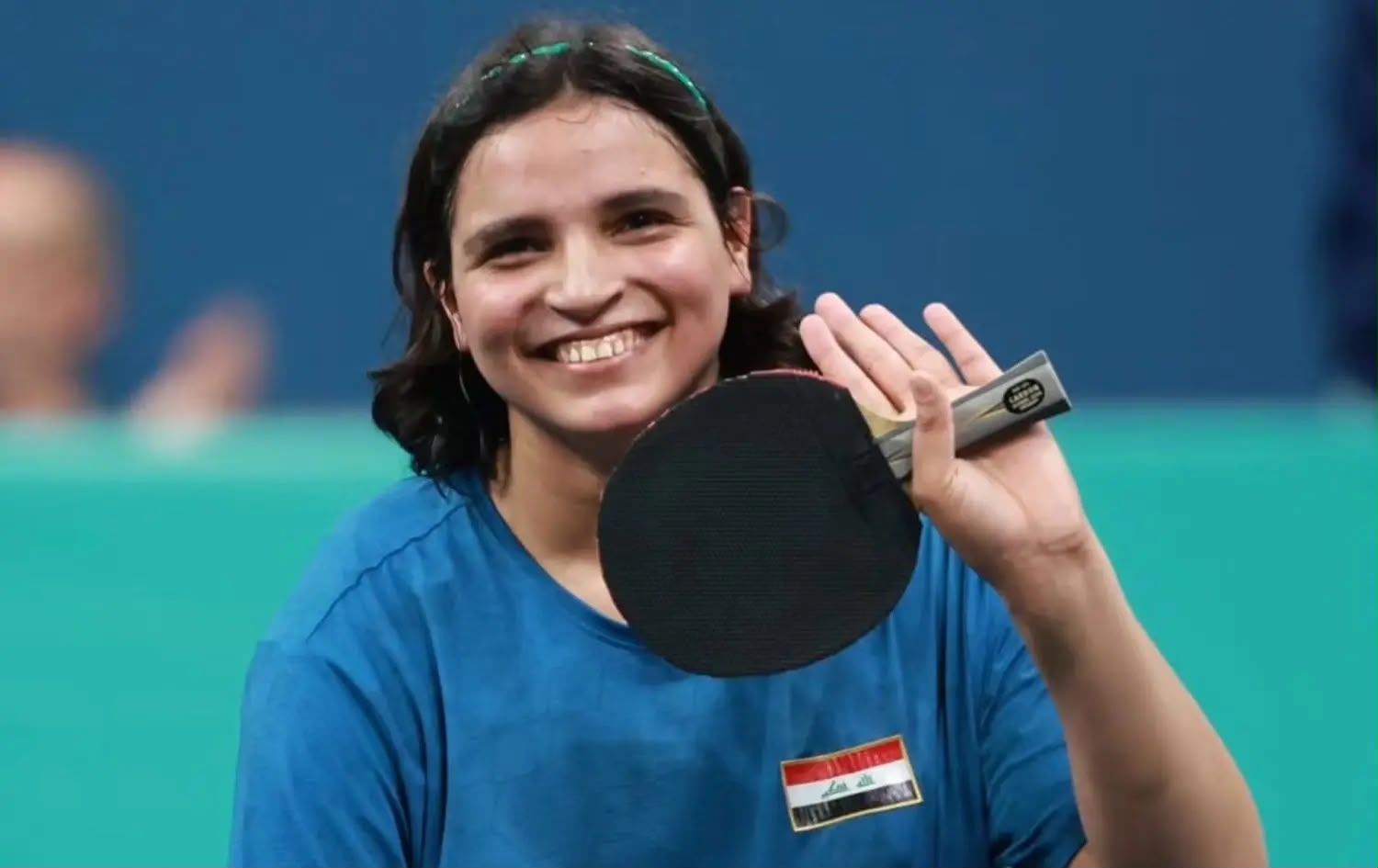
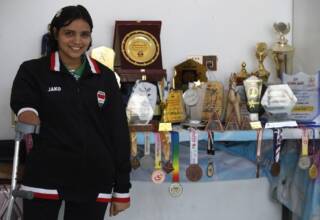
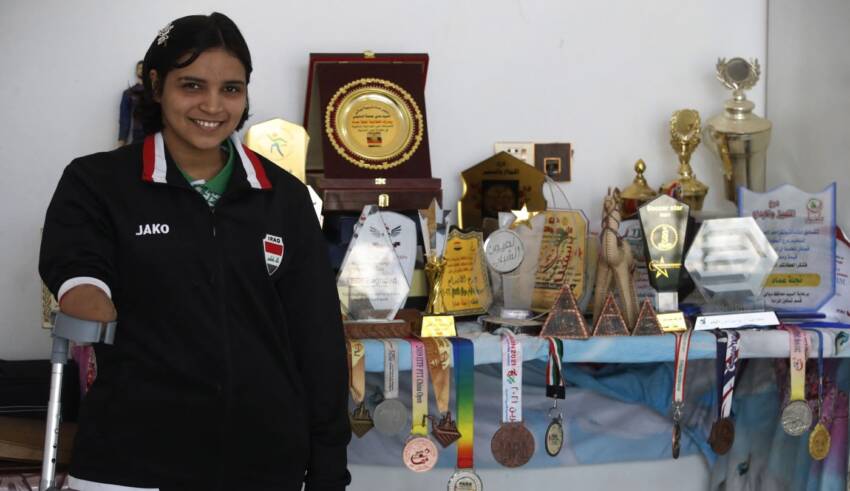
For Iraq’s para table tennis champion Najla Imad, the Iraqi flag is never just part of the ceremony. It is the reason she competes, the symbol she carries into every tournament and the achievement she wants the world to remember.
“Nothing compares to the feeling of seeing Iraq’s flag raised and hearing the national anthem played at major international events,” she says. “At that moment, I think of nothing except making sure our country’s flag is present at every competition.”
Her words capture a sporting journey in which winning has become more than a personal ambition. It is a responsibility she feels every time she represents Iraq.
From Paris to the top of the podium
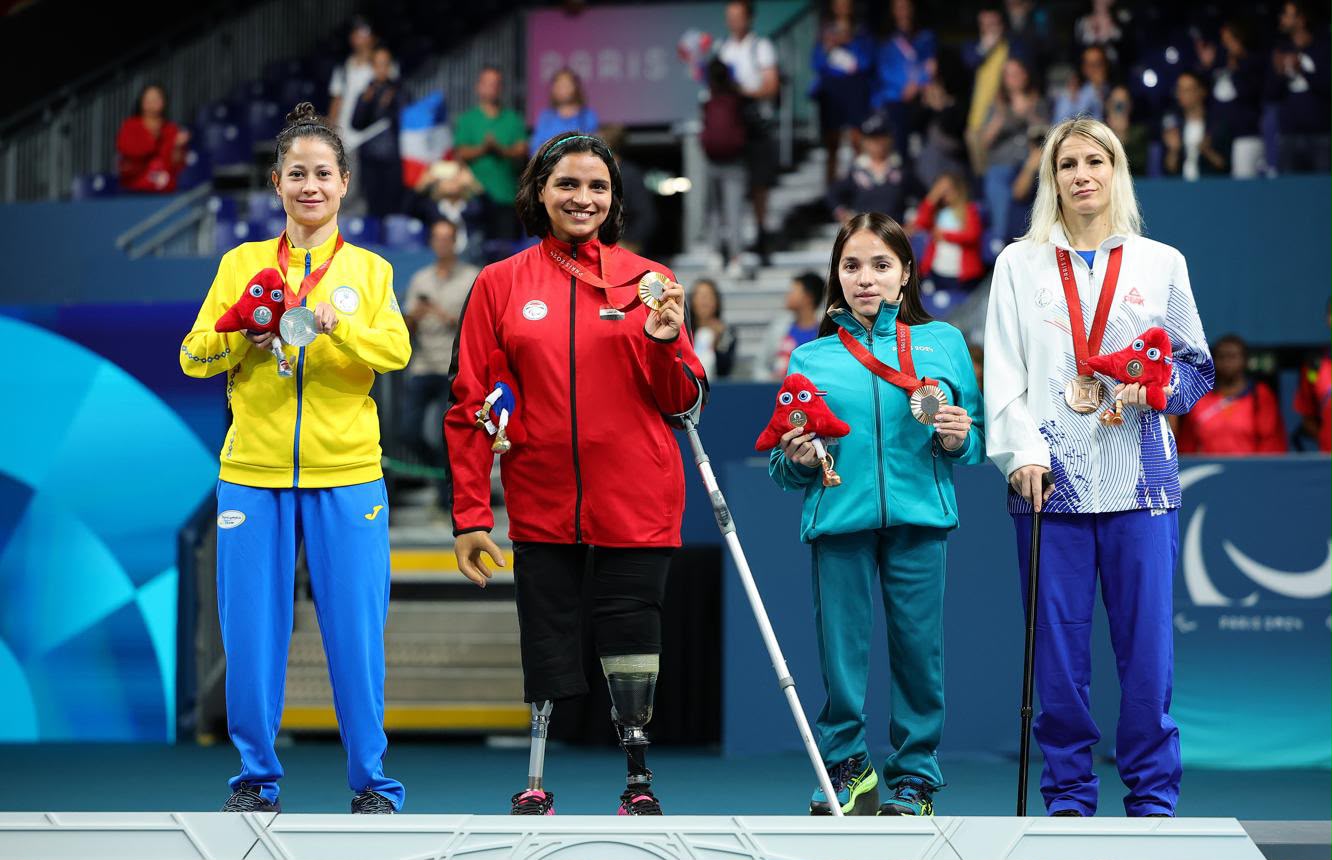
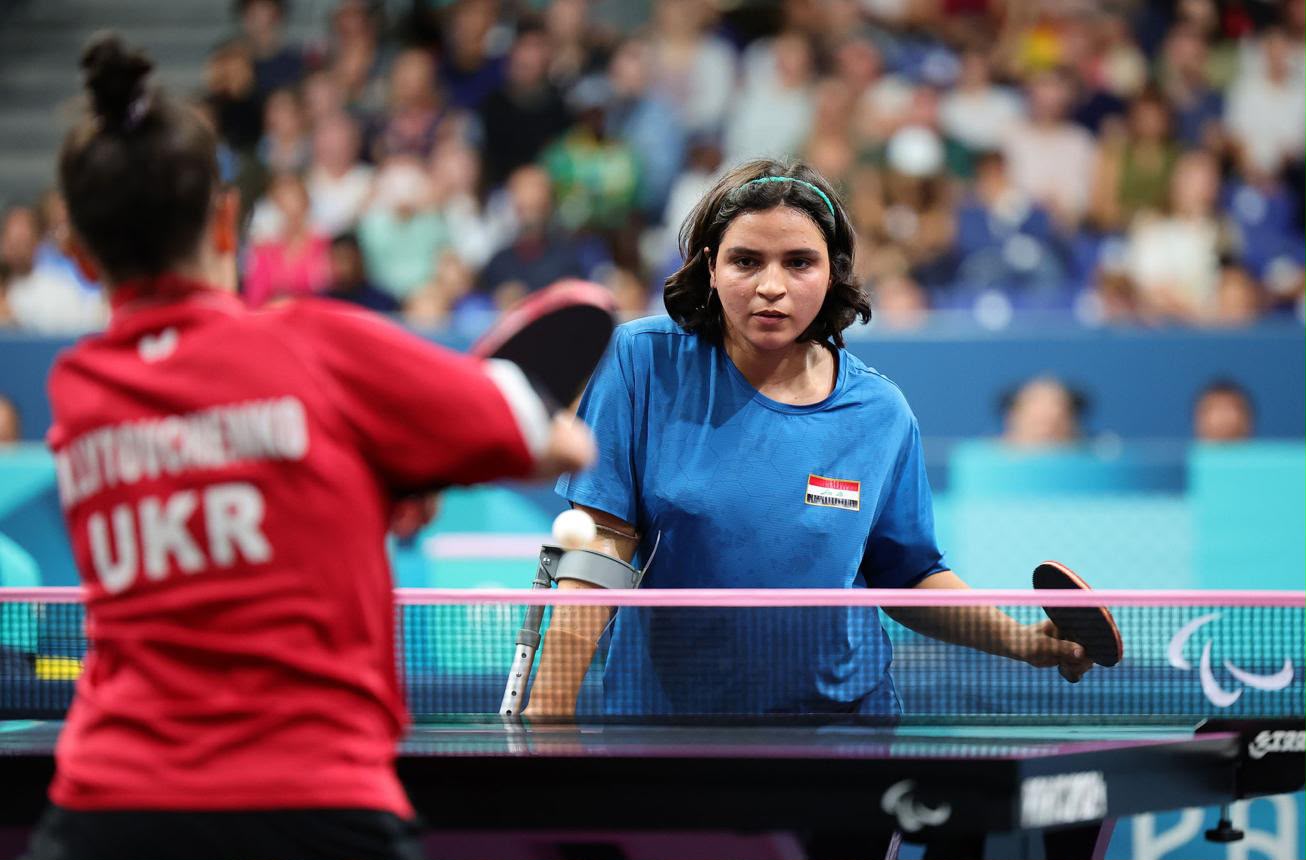
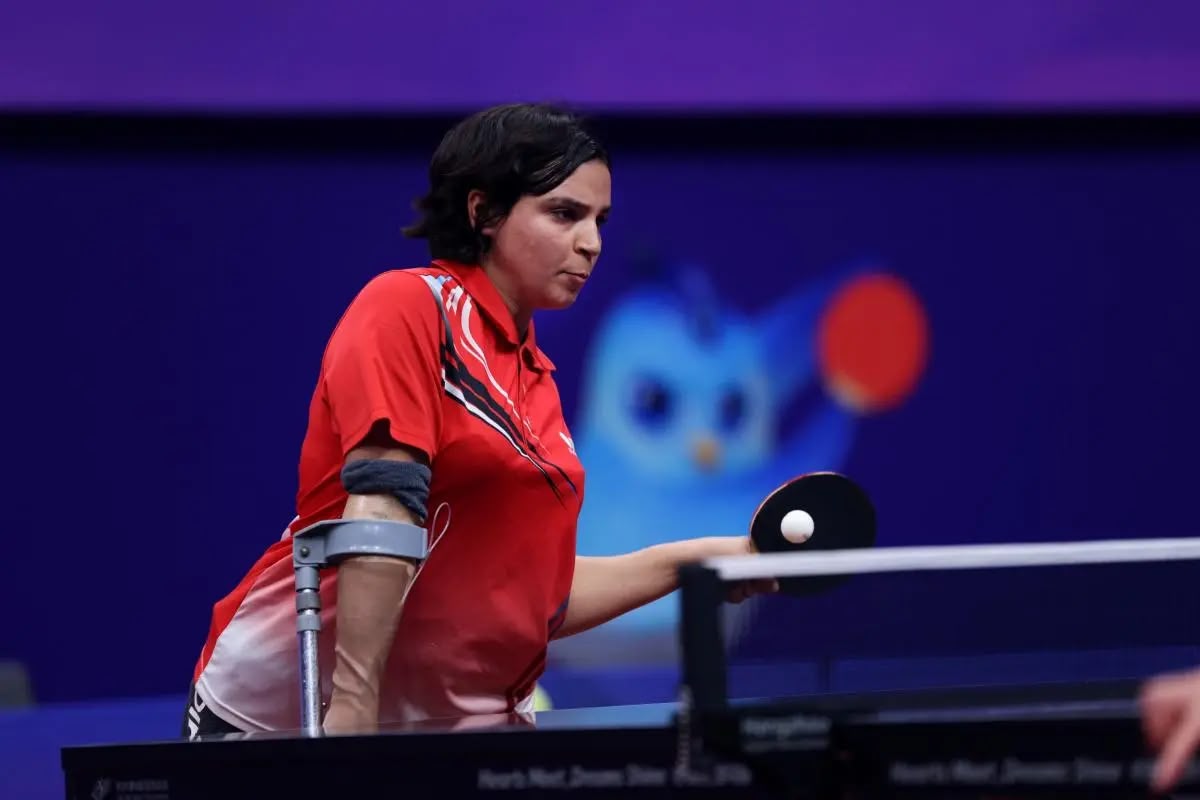
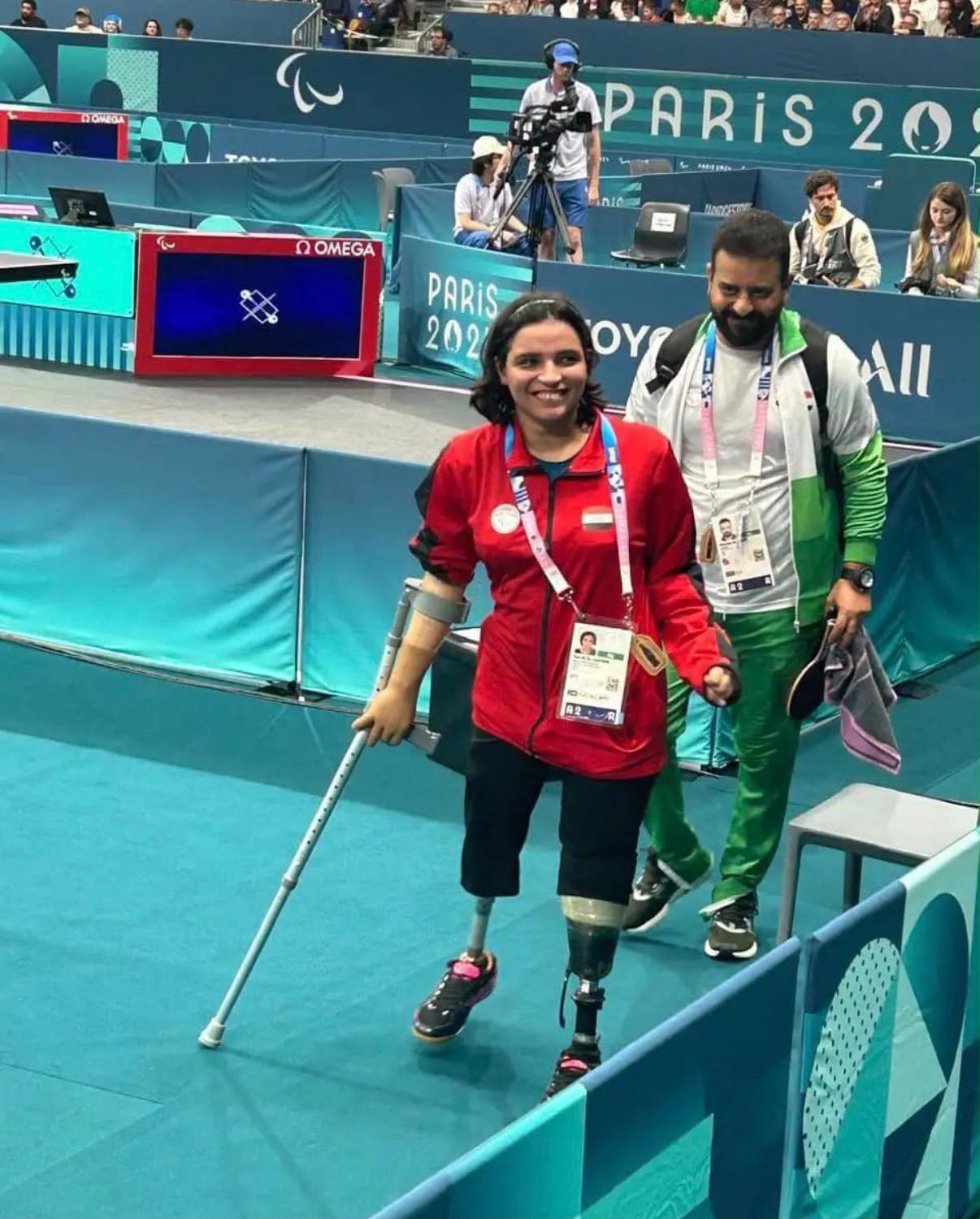
On 7 September 2024, Imad made history at the Paris Paralympic Games, winning gold in the women’s singles Class 6 table tennis event. Her victory over Ukraine’s Maryna Lytovchenko secured Iraq’s first-ever Paralympic medal in para table tennis—and it was gold.
The achievement placed Imad among the defining figures in Iraqi para sport. Yet Paris was not the end of her journey. It became a starting point for a new challenge: proving that she could remain at the highest level and defend her position against the world’s strongest competitors.
In 2026, that determination was reflected in a remarkable sequence of international victories.
She won gold in the women’s singles Class 6 event at the ITTF World Para Future Lahti in Finland, held from 28 to 30 August. She then claimed another title at the ITTF World Para Elite Yvelines in France, held from 12 to 16 September.
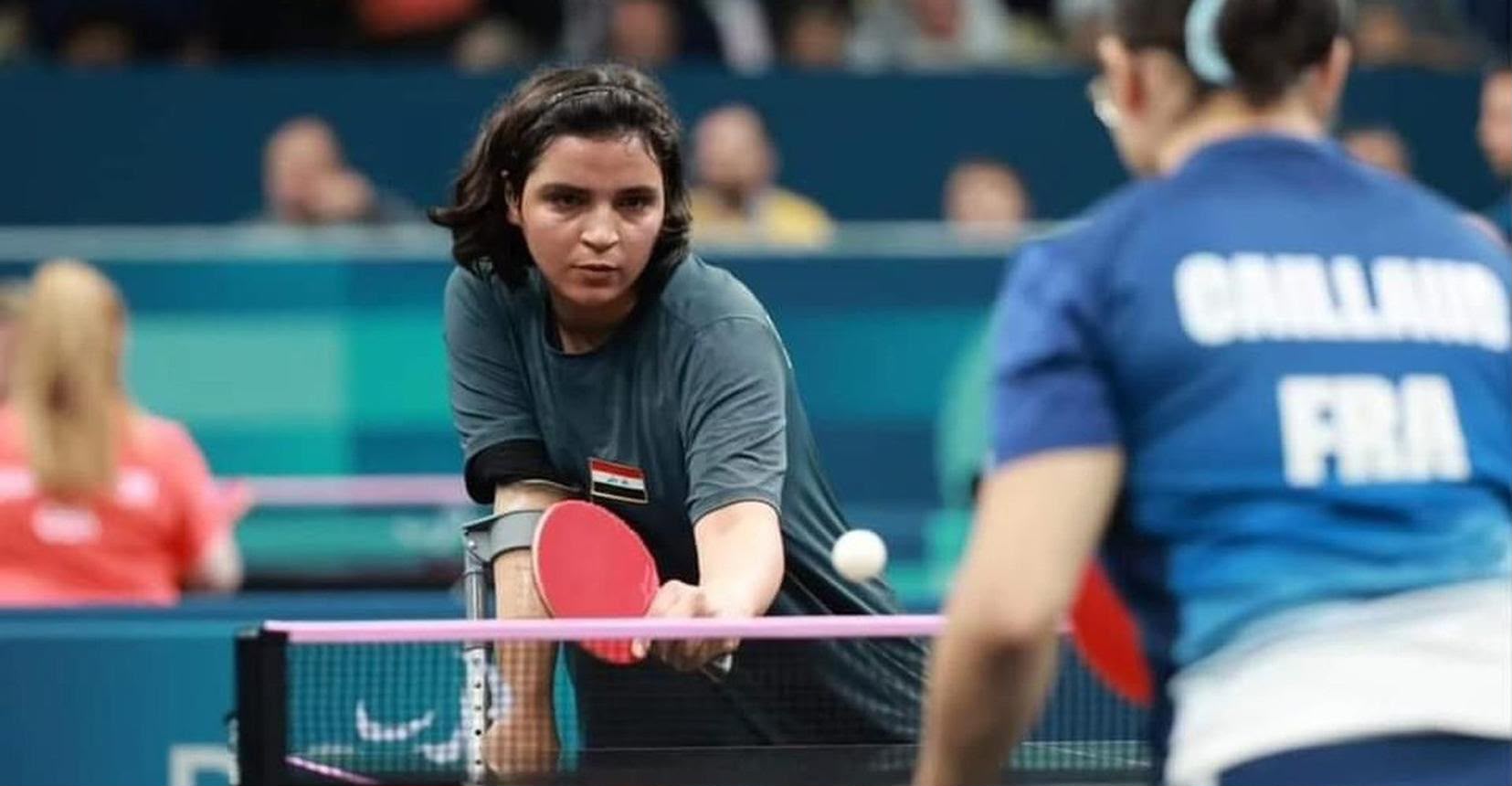
In France, Imad faced a demanding field of international opponents. According to her account, she defeated players from Britain and Sweden before overcoming a French opponent in the semi-final for the seventh time, winning 3–0.
The final brought another major test against a Russian opponent whom Imad described as the world’s top-ranked player. Despite falling behind early, she regained control of the match through concentration and the guidance of her coach, Haider Salim, to secure the gold medal.
“Despite the difficult start, my concentration and my coach’s instructions helped me get back into the match and win the gold medal,” she says.
Her international success continued in Spain. At the ITTF World Para Future Region de Murcia, held from 6 to 9 October, she secured another gold in the women’s singles Class 6–7 event.
Then came Japan.
On 20 October 2026, at the Aichi-Nagoya Asian Para Games, Imad defended her continental title by defeating China’s Liu Xiaowu 3–1 in the women’s singles Class 6 final. She lost only one game throughout the tournament.
“Thank God, I managed to defend this title for the second time,” she says.
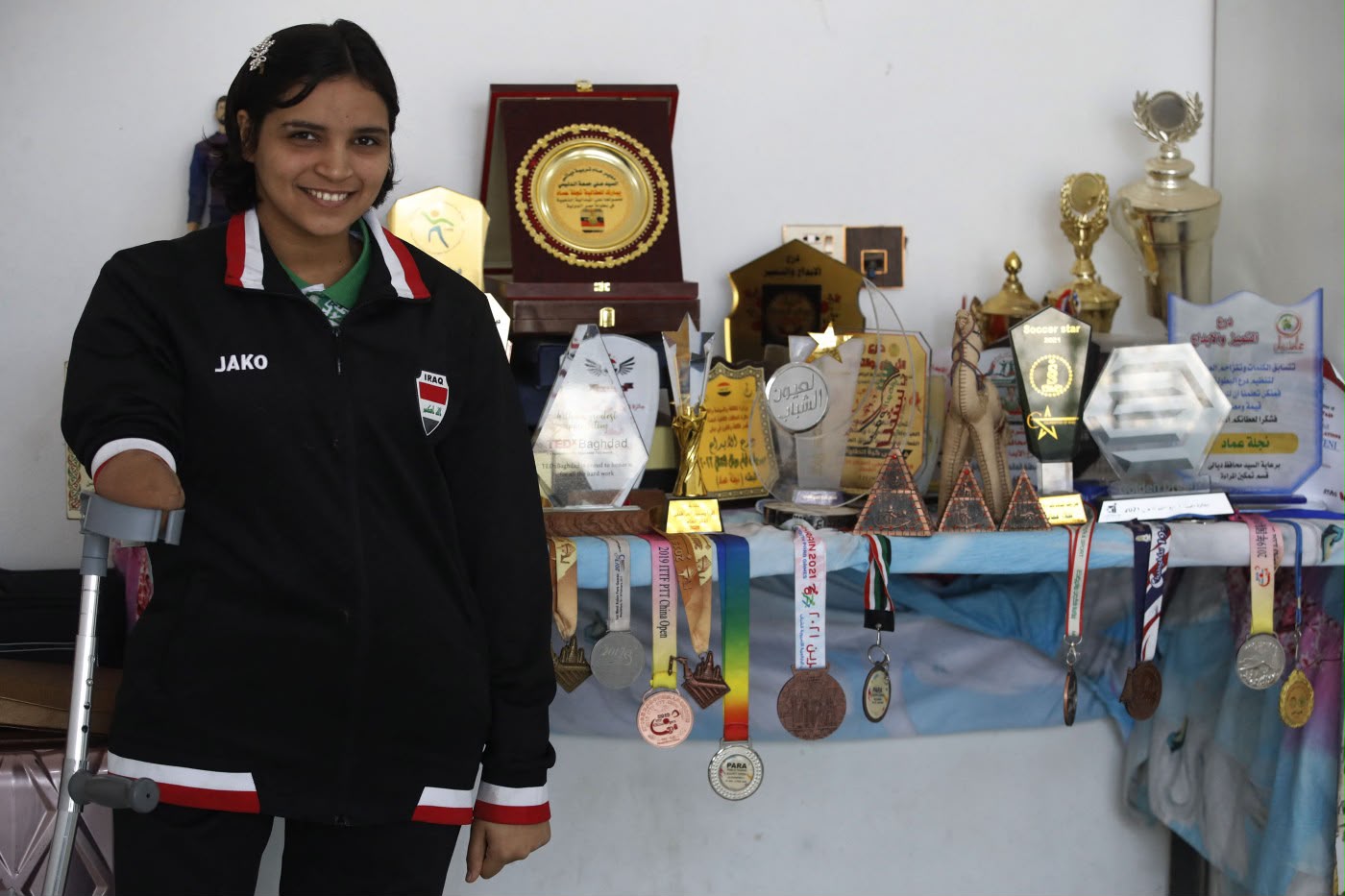
Four international gold medals in a little under two months, following her Paralympic triumph in Paris, tell a story of consistency as much as talent. For Imad, every new tournament is another opportunity to demonstrate that her place among the leading athletes in her sport is no coincidence.
The journey behind the medals
The podium reveals the result. It rarely reveals the daily routine that makes it possible.
Imad describes a demanding training schedule that requires her to travel from Diyala to Baghdad for daily practice.
“This does not come easily. It takes hard work and daily training, travelling from Diyala to Baghdad,” she explains.
Her ambition, she says, remains unchanged whenever she enters a competition.
“Whenever I take part in a tournament, my ambition is gold. I do not think about anything else.”
But behind that determination is a challenge that deserves attention beyond the sporting headlines.
In her interview, Imad made a direct appeal to Iraq’s Prime Minister for greater support for para sport and the athletes who represent the country internationally. She called for both financial and moral support, highlighting a personal issue that affects her ability to train and compete: the need to replace her sports prostheses.
She explained that the prosthetic equipment she currently uses is around two or three years old and needs replacing. More modern sports prostheses, she said, would make a significant difference to her movement and performance.
It is a striking contrast. An athlete capable of winning against the world’s best is also asking for access to equipment that can help her continue competing at that level.
Her appeal is not limited to financial assistance. She also called on television broadcasters to accompany the team to international competitions and show their matches, allowing Iraqi audiences to follow their athletes beyond the moments when medals are awarded.
For Imad, visibility matters. The achievements of para athletes deserve to be seen, understood and supported throughout the journey—not only celebrated after a victory.
Haider Salim: Preparation behind the performance
Behind Imad’s results is the work of her coach, Haider Salim, whose role has been central to her preparation and performance in major competitions.
Speaking after the victory in Japan, Salim emphasised the importance of preparation and tactical analysis.
“We were fully prepared for this tournament. We had studied the Chinese player and all the other competitors,” he said.
He explained that Imad had won her matches 3–0 throughout the competition, with the final being the only match in which she dropped a game.
His comments offer a glimpse into the work behind the result: studying opponents, preparing for different playing styles and ensuring that the athlete is ready for the decisive moments.
Imad herself acknowledged the importance of her coach’s guidance in the French final, particularly when she had to recover after falling behind.
Their partnership illustrates how individual talent and technical preparation combine at the highest level of para table tennis.
The federation and the responsibility of sustaining success
For Louay Al-Saray, head of Iraq’s Para Table Tennis Federation, Imad’s victories represent both an achievement and a responsibility.
He explained that the federation’s plan for the Asian competition was not simply to defend Imad’s previous gold medal, but also to add another medal through fellow Iraqi player Muntadher Farouq.
“We planned to defend this medal and add another one through champion Muntadher Farouq,” Al-Saray said.
He acknowledged the pressure surrounding the team, the athlete and her coach.
“The federation was under pressure, as were the athlete and her coach, Haider Salim. We managed to preserve Najla Imad’s gold medal and add another medal. Thank God, we succeeded.”
Asked whether Imad could be considered the greatest player in Iraq’s sporting history, Al-Saray pointed to her Paralympic gold as a defining measure of her achievement.
He also spoke about the federation’s ambitions beyond the Asian Games, saying that preparations would continue for the Los Angeles 2028 Paralympic Games, with Imad and her teammates among those being considered for the next stage.
His remarks underline an important point: preserving success requires planning, investment and sustained support. A champion’s achievements may be individual, but the conditions that allow those achievements to continue are a collective responsibility.
A champion’s next challenge
From Paris to Finland, France, Spain and Japan, Najla Imad has continued to add to her international record. Her results show an athlete capable of defending major titles and responding to the pressure of the highest level of competition.
Yet her own words reveal another side of the story: the daily journey to training, the need for modern sports prostheses and the desire for greater institutional and media support.
Her ambition remains clear. She wants gold, and she wants the Iraqi flag to keep appearing at international competitions.
But the responsibility for the next chapter cannot rest on her shoulders alone. Sustaining a champion requires more than celebrating victories. It requires providing the equipment, preparation, support and visibility that allow an athlete to keep competing at the highest level.
Najla Imad has already shown what she can achieve for Iraq. The next challenge is to ensure that the support around her matches the scale of her ambition.
When Iraq’s flag rises above the podium, it is not only a moment of victory. It is a reminder of what Iraqi athletes can achieve—and of what their country must do to help them keep achieving it.